Working Group · Uganda
Help for self-help in Mbarara
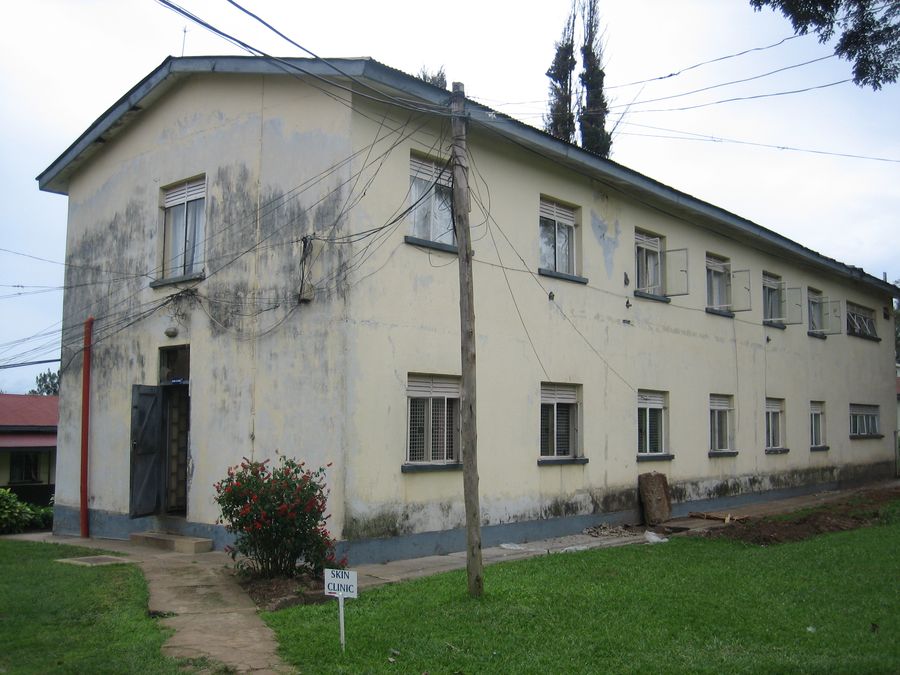
German specialists train dermatologists on site to create sustainable change. At the centre is the Skin Clinic at Mbarara University — Uganda’s only dermatology clinic.
Our aims
Imagine …
- … you live in bitter poverty in Uganda, one of the poorest countries in the world.
- … you or your child suffer from a distressing skin disease.
- … the walk to the nearest doctor takes many hours or even days.
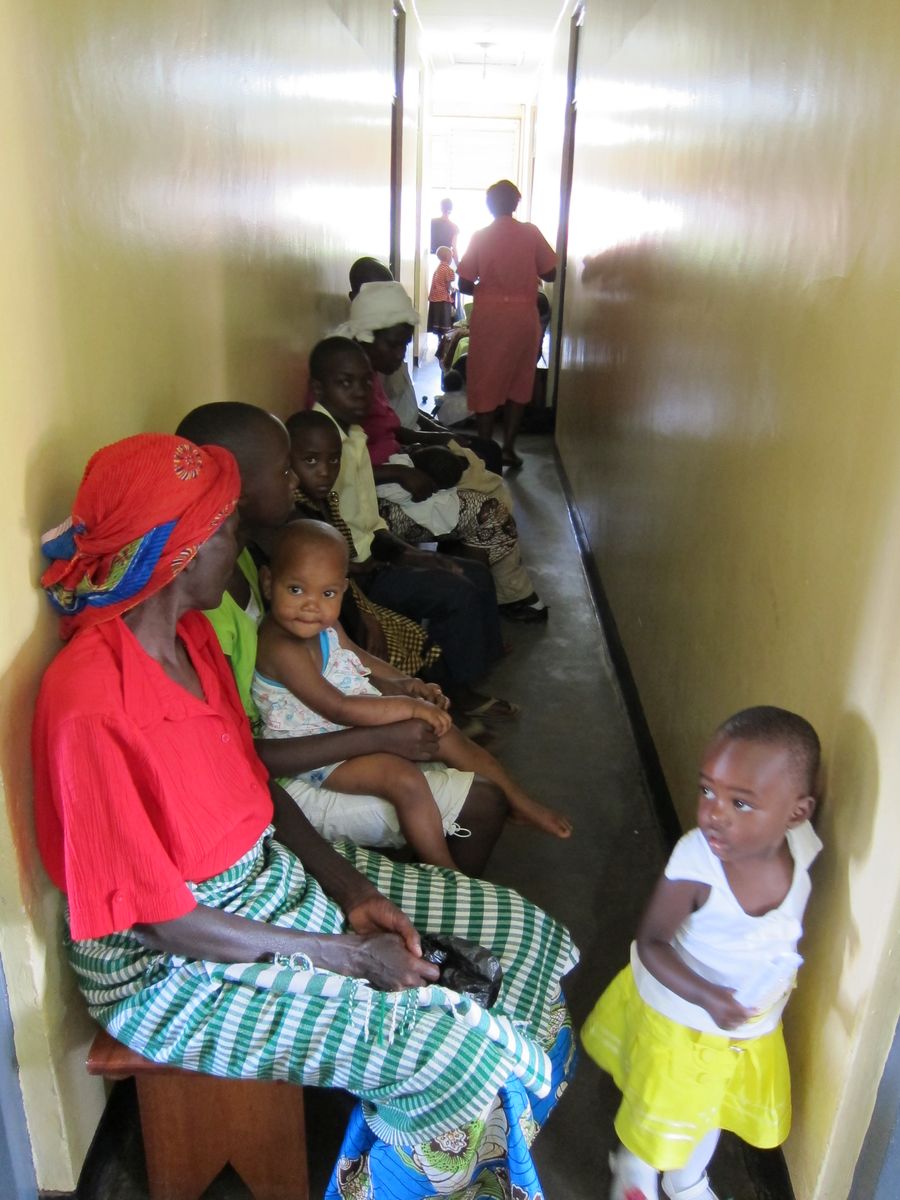
- … finding a dermatologist is almost impossible: for Uganda’s roughly 40 million people there are fewer than ten dermatologists.
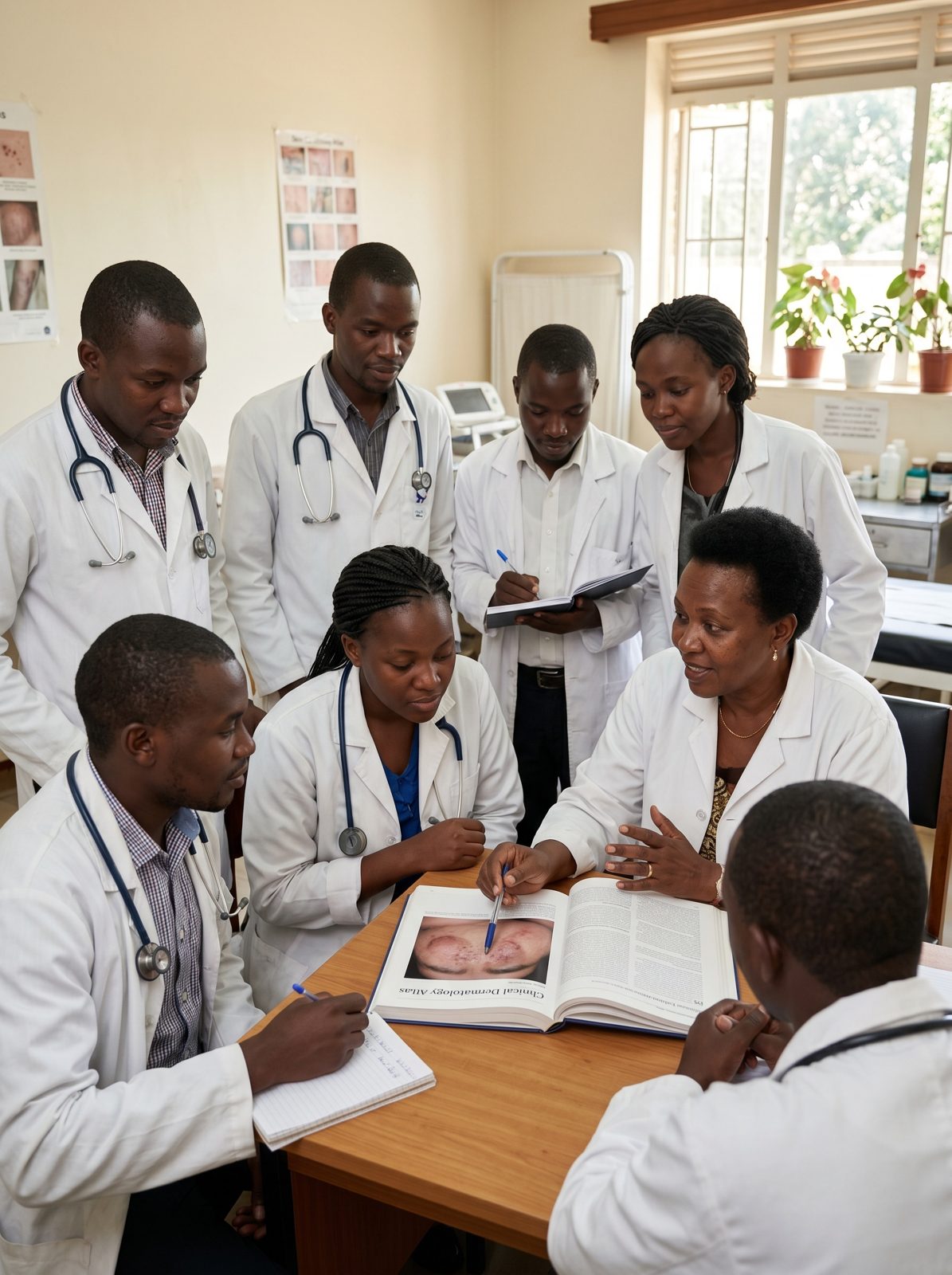
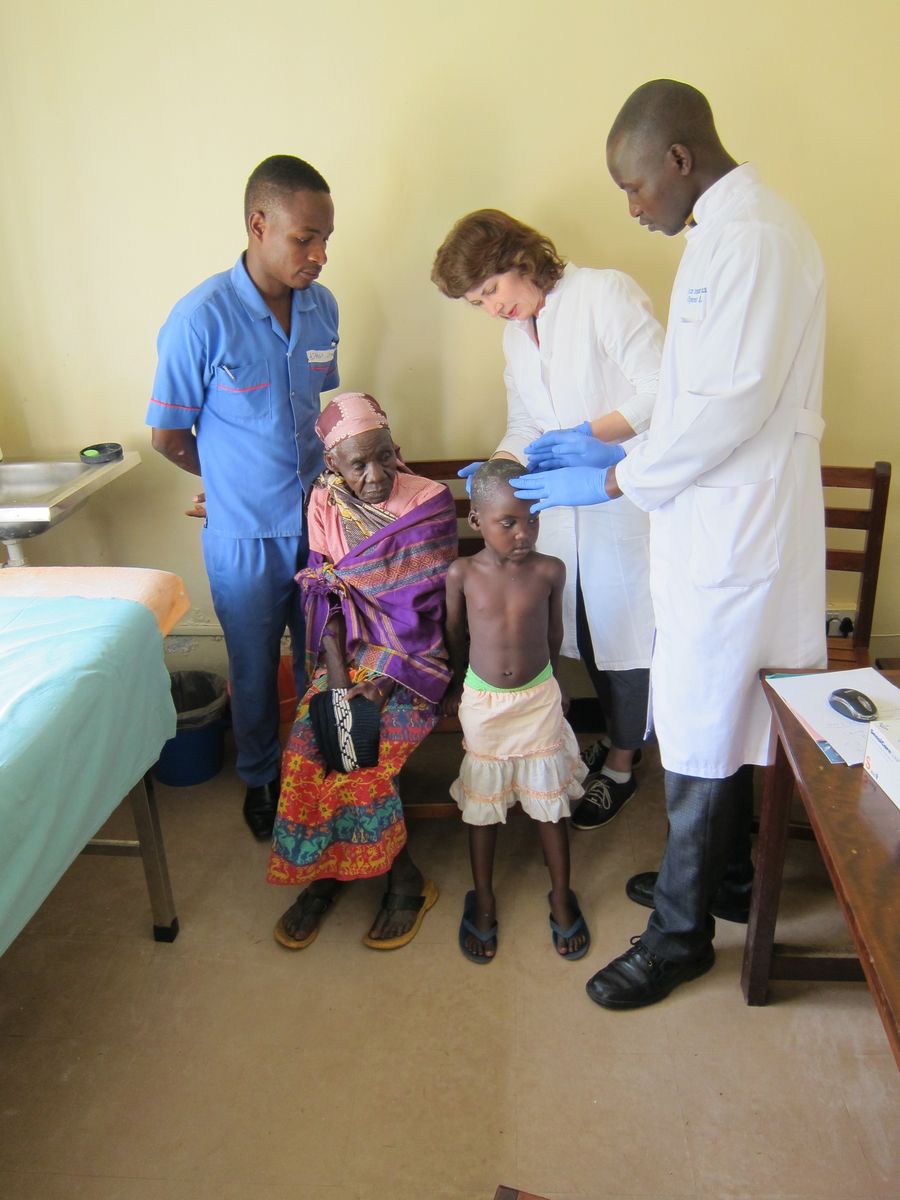
We want to provide help for self-help and achieve a sustainable improvement in dermatological care in Uganda. Through targeted support for the dermatology clinic at Mbarara University, local physicians are trained to become qualified specialists — who then pass their knowledge on throughout the country.
How we help
Our help is provided very largely on a voluntary basis — in the work on site as well as in administration and public relations. All donations benefit the people in Uganda exclusively.
Financial
- Procurement of urgently needed medical equipment, furnishings and specialist literature
- Purchase of essential medicines and ointments for the care of the poorest of the poor
- Training of young aspiring dermatologists who receive no salary from the university during their residency
- Funding of further-training stays abroad for the resident physicians
Personnel
- Placement of experienced German dermatologists for unpaid work on site
- Training of local physicians to international standards
- Teaching of medical students
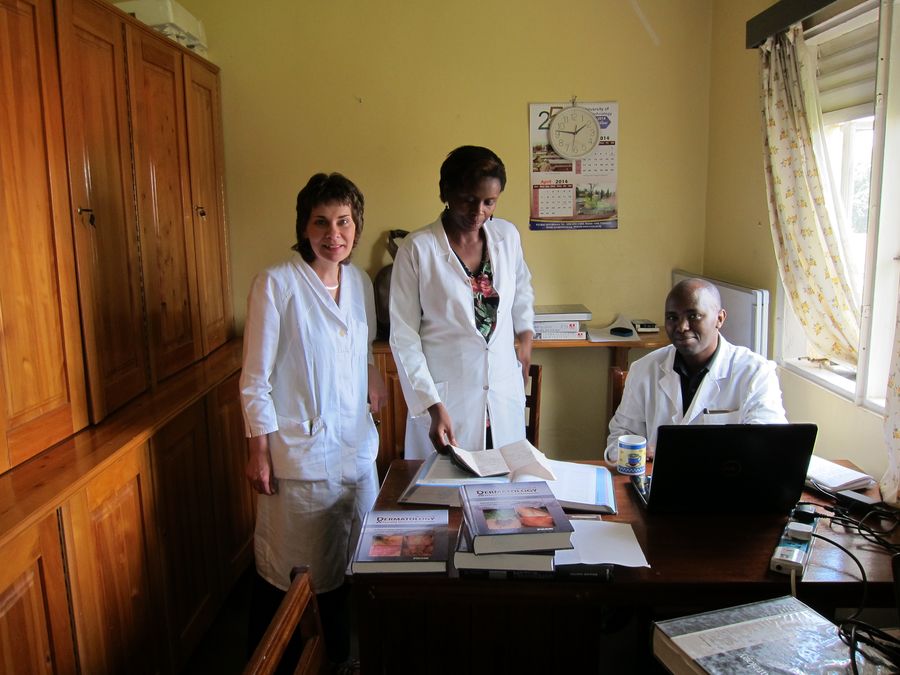
The Skin Clinic in Mbarara
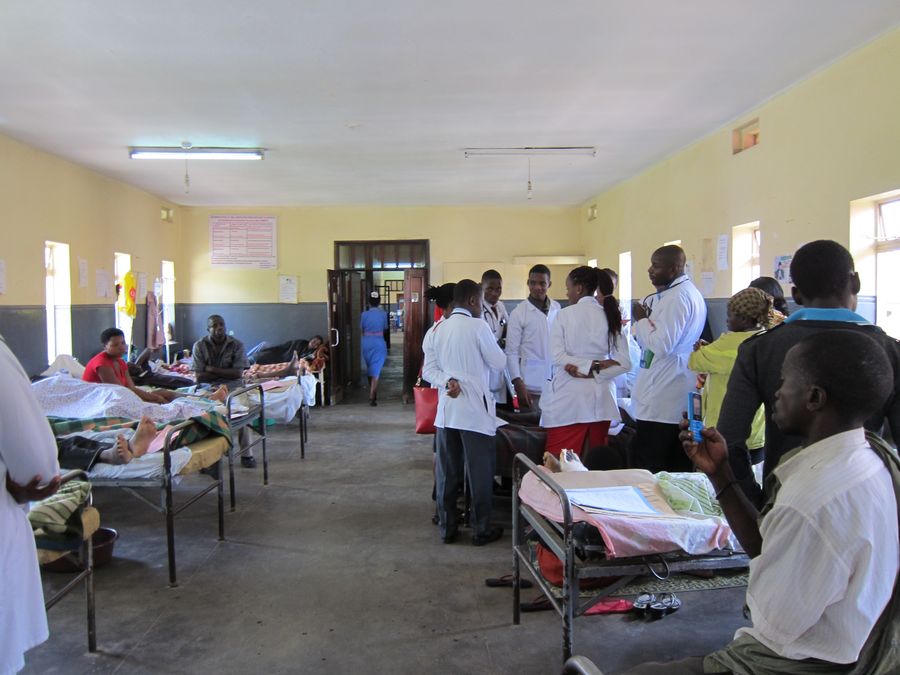
What we are dealing with
Skin diseases play an immense role in Uganda — the spectrum differs markedly from that in Europe.
Infectious diseases
Fungal infections of the scalp (tinea capitis) affect most children; scabies and bacterial skin infections are widespread and, left untreated, lead to severe complications.
HIV-associated skin diseases
Skin diseases occur in almost all HIV-infected people and run a particularly severe course — from extensive viral warts to lichen planus.
Keloids
Strongly pigmented skin is prone to pronounced raised scars — for example after injuries, ear piercing or the burns common in Uganda from cooking over an open flame.
Skin tumours & albinism
Malignant skin tumours are rarer overall, but hit people with albinism especially hard: they often develop skin cancer at a young age.
Adverse drug reactions
The uncontrolled use of medicines — often based on symptom schemes due to a lack of doctors — frequently leads to severe skin reactions.
Tropical diseases
For instance infestation with sand fleas (tungiasis, “jiggers”) among the barefoot rural population — with itching, inflammation and foot deformities.
History
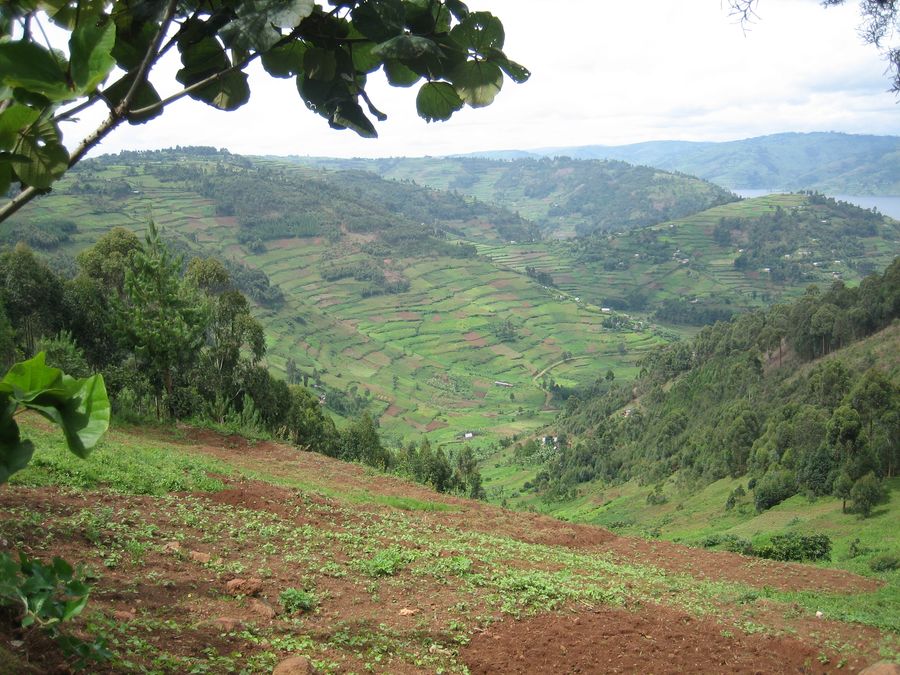
Until the Skin Clinic was established, Uganda — like many African countries — had no qualified treatment for skin diseases and no opportunity to learn the discipline.
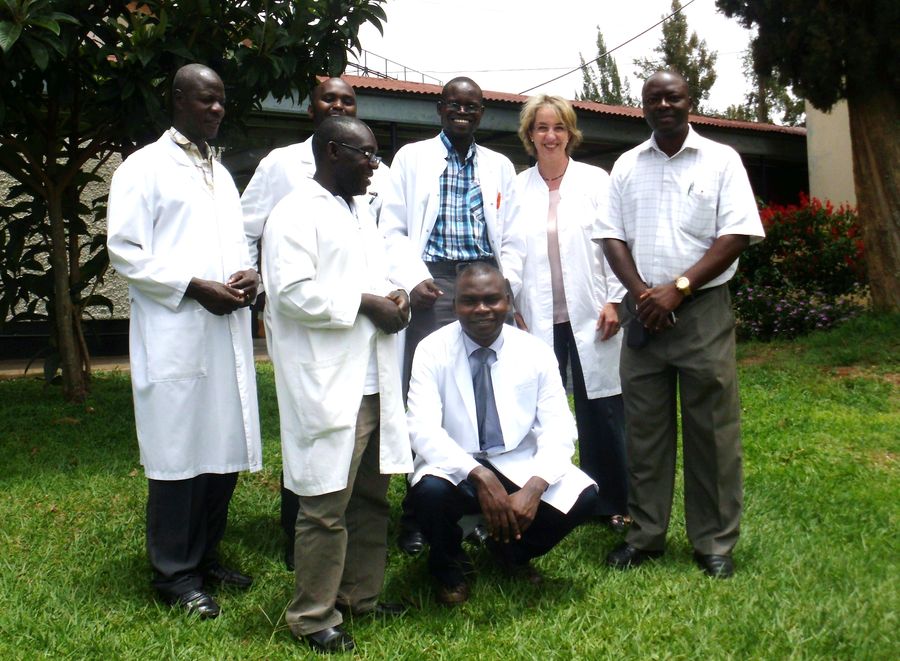
In 1997 the Würzburg dermatologist Prof. Dr. Gerold Jäger, together with his wife Dr. Elisabeth Jäger, founded the Skin Clinic at Mbarara University and thereby laid the foundation for the country’s dermatological care. Until 2004 the couple built up the clinic on site and continued to support it year after year thereafter. For their commitment, the Jägers were awarded the Federal Cross of Merit in 2014.
In 2010 the association “Skin Health for Africa”, based in Jena, was founded to carry on the Jägers’ life’s work — in 2019 it was merged into the ISDT Uganda working group.
Today the Skin Clinic is led by the Ugandan dermatologist Dr. Grace Mulyowa. As a training institution it enjoys an excellent reputation throughout East Africa — yet, owing to the precarious financial situation of the Ugandan health system, it remains urgently dependent on support.
Uganda in figures
- < 10
- dermatologists for around 40 million inhabitants
- 1 : 20,000
- physicians per inhabitant (Germany: 1 : 250)
- €35
- public health expenditure per capita per year
- 15 years
- average age — one of the youngest populations worldwide
Cooperation partner
The working group cooperates closely with a branch of the order of the Daughters of Divine Charity, the Mother Franciska Lechner Health Unit II in Rushooka (about 100 km west of Mbarara). There the sisters of the order run a health centre that provides medical care for the entire region — from HIV screening through vaccinations to basic diagnostics in their own laboratory.
The European visiting physicians of the Skin Clinic regularly come to Rushooka for weekend consultations, examine patients with skin diseases and, where necessary, arrange transport to the Skin Clinic.
Contact: Sr. Marlene Webler · Africamtw@gmail.com
From the work of the working group
-
September 2020
Dr. Peter Mugisha, largely responsible for training the resident physicians at the Skin Clinic, dies at the age of 38 from the consequences of a COVID-19 infection. He leaves behind a gap that is almost impossible to fill.
-
2020
The coronavirus pandemic brings public life to a standstill with a strict lockdown; the planned assignments of Prof. Jäger and Dr. El Gammal have to be cancelled.
-
September 2019
The ISDT general assembly in Dresden resolves to establish the Uganda working group; the association “Skin Health for Africa e.V.” is dissolved and its assets transferred to the ISDT.
-
2019
Generous equipment donations (including an autoclave, surgical instruments and UV technology) reach the Skin Clinic after a lengthy approval process.
-
2018
Four new resident physicians from Tanzania, Somalia and Kenya begin their training — eleven aspiring dermatologists are now at the Skin Clinic. Donation and commissioning of a UVB whole-body therapy unit.
-
2016–2017
Several-week teaching assignments by German dermatologists (including Dr. Miller-Schaake, Dr. El Gammal, Prof. Weisshaar); four graduates receive their specialist accreditation. Introduction of electronic patient data recording.
Donations
Every amount helps — and reaches Uganda without deductions. On request we are happy to issue a donation receipt (please state your address on the transfer form).
- Recipient
- International Society of Dermatology in the Tropics e.V.
- IBAN
- DE94 6649 0000 0015 3915 02
- BIC
- GENODE61OG1
- Bank
- Volksbank in der Ortenau, Offenburg
Joining as a physician
Would you like to help on site at the Skin Clinic? We welcome any support. This is what you should bring:
- Completed specialist training in dermatology and several years of professional experience
- Very good command of English
- Willingness to train young resident physicians
- At least three weeks of time; you bear the costs of the stay yourself, the university provides accommodation
Photos: Archive of the Uganda working group / ISDT e.V.